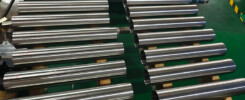
In the heavy machinery sector, hydraulic cylinders are the core power components that ensure stable equipment operation. The choice of material for critical parts—piston rods and cylinder barrels—directly determines the hydraulic cylinder’s performance, reliability, and service life. Faced with diverse global industrial standards (such as European EN, North American ASTM/SAE, and Asian JIS), purchasers and OEM manufacturers often encounter challenges when selecting “25CrMo4 equivalent” materials. This article aims to provide an authoritative guide, delving into 25CrMo4 and its primary international equivalents, to help you make precise and efficient procurement decisions.
Bottom Line Up Front: A Global Overview of Optimal Alternatives
For critical components of high-performance hydraulic cylinders, such as piston rods and cylinder barrels, AISI 4130 (North America), SAE 4130 (North America), and JIS SCM430 (Asia) are recognized as reliable international equivalent materials to EN 25CrMo4. Through our strictly controlled and precise heat treatment processes (quenching and tempering), these materials consistently deliver excellent performance with tensile strengths ranging between 900-1100 MPa and yield strengths between 750-950 MPa. They ensure superior fatigue life and impact toughness, fully meeting the demands of rigorous industrial applications such as mining, construction machinery, offshore oil and gas, and agricultural equipment.
Why This Conclusion: Validated by Standards, Testing, and Practical Application
This conclusion is based on our in-depth cross-comparison and analysis of the chemical composition and mechanical properties defined by major international material standards, including EN 10083-3 (25CrMo4), ASTM A29/A519 (AISI 4130), and JIS G4053 (SCM430). These standards explicitly define the chemical composition, heat treatment conditions, and final mechanical properties for chromium-molybdenum alloy steels, ensuring material equivalency across different regions.
As a professional hydraulic cylinder manufacturer, we operate a specialized laboratory equipped with advanced testing instruments capable of performing stringent incoming raw material inspections. We utilize high-precision spectroscopic analyzers to ensure the accurate matching of raw material chemical compositions, and conduct comprehensive tensile, impact, hardness (e.g., surface hardness HRC 60-64), and metallographic tests. All critical performance data strictly adhere to relevant international standards. We are committed to providing Material Test Certificates (MTCs) compliant with ISO 10474/EN 10204: 3.1 or 3.2 standards, ensuring full traceability and controllable quality from raw material to finished product.
Proven in Practice:
We have accumulated extensive successful experience in delivering customized hydraulic cylinder solutions to global clients. For instance, in a project for a major South American mining client, addressing the need for high-strength and high-durability piston rods for their heavy-duty mining equipment, we utilized AISI 4130 (Quenched & Tempered) material compliant with ASTM A519 standards. Through our rigorous fatigue life validation, these piston rods demonstrated performance fully consistent with the expected properties of the original EN 25CrMo4 design under simulated extreme operating conditions. This project has been successfully operating to date, significantly enhancing the client’s equipment reliability and effectively reducing overall operating costs.
Detailed Analysis: Technical Deep Dive into 25CrMo4 and Equivalent Materials
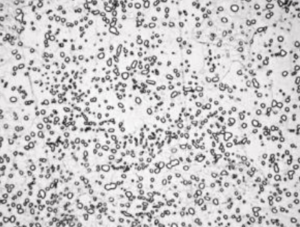
25CrMo4 is a chromium-molybdenum alloy structural steel, widely used within the European (EN) standard system for manufacturing high-stress, heavy-load mechanical components such as crankshafts, gears, shafts, as well as hydraulic cylinder piston rods and barrels. This is due to its excellent strength, toughness, hardenability, and good machinability. After quenching and tempering, it achieves a favorable combination of mechanical properties.
1. EN 25CrMo4 (European Standard)
- Standard Basis: EN 10083-3
- Chemical Composition Characteristics: Contains approximately 0.22-0.29% carbon, 0.90-1.20% chromium, and 0.15-0.30% molybdenum. Chromium increases hardenability and strength, while molybdenum further enhances strength, toughness, and high-temperature creep resistance.
- Typical Applications: Hydraulic systems in construction machinery, automotive industry, pressure vessels, etc., in the European market.
2. AISI 4130 / SAE 4130 (North American Standard)
- Standard Basis: ASTM A29/A519 (tubing), ASTM A506/A507 (plates), etc. SAE 4130 is its corresponding Society of Automotive Engineers standard.
- Chemical Composition Characteristics: Composition is highly similar to 25CrMo4, typically containing 0.28-0.33% carbon, 0.80-1.10% chromium, and 0.15-0.25% molybdenum.
- Typical Applications: Hydraulic cylinders in aerospace, oil and gas (e.g., drilling equipment), racing, heavy agricultural, and construction machinery in North America. ASTM A519 4130 cold-drawn seamless tubing is a common material for hydraulic cylinder barrels and piston rods in North America.
3. JIS SCM430 (Japanese Standard)
- Standard Basis: JIS G4053
- Chemical Composition Characteristics: The structural composition is also primarily chromium-molybdenum alloy steel, with 0.28-0.33% carbon, 0.90-1.20% chromium, and 0.15-0.30% molybdenum.
- Typical Applications: Hydraulic systems in construction machinery, automotive components, mold steel, etc., in Asia (especially Japan, South Korea, Southeast Asia).
Comparative Table of Key Performance Parameters (Quenched & Tempered State):
| Characteristic / Material | EN 25CrMo4 | AISI 4130 / SAE 4130 | JIS SCM430 | Notes |
|---|---|---|---|---|
| Carbon (C) | 0.22-0.29% | 0.28-0.33% | 0.28-0.33% | Determines hardness and strength |
| Chromium (Cr) | 0.90-1.20% | 0.80-1.10% | 0.90-1.20% | Improves hardenability, strength, wear resistance |
| Molybdenum (Mo) | 0.15-0.30% | 0.15-0.25% | 0.15-0.30% | Improves strength, toughness, high-temperature strength |
| Tensile Strength (Rm) | 900-1100 MPa | 900-1100 MPa | 900-1100 MPa | Based on standard specifications and average test data |
| Yield Strength (Rp0.2) | 750-950 MPa | 750-950 MPa | 750-950 MPa | Based on standard specifications and average test data |
| Elongation (A) | ≥12% | ≥12% | ≥12% | Measures plasticity, ductility |
| Reduction of Area (Z) | ≥50% | ≥50% | ≥50% | Measures plasticity, ductility |
| Impact Toughness (KV2@20℃) | ≥60 J | ≥60 J | ≥60 J | Measures resistance to brittle fracture |
| Hardness (HB) | 260-310 | 260-310 | 260-310 | Hardness range after Q&T |
Machinability, Weldability, and Heat Treatment Response:
These chromium-molybdenum alloy steels generally exhibit good machinability and weldability. However, welding requires preheating and post-weld treatment to prevent cracking. A common characteristic is their favorable response to heat treatment (especially quenching and tempering), which allows them to achieve a balanced combination of high strength and high toughness. This is crucial for the fatigue life of hydraulic cylinder piston rods and the pressure resistance of cylinder barrels.
Application Scenarios Analysis:
- Piston Rods: Require high tensile strength, high yield strength, high fatigue strength, good wear resistance, and impact toughness. After quenching and tempering, combined with hard chrome plating (e.g., surface hardness HRC 60-64, chrome layer thickness typically 20-30μm, passing over 500 hours of salt spray testing), AISI 4130/SCM430 piston rods can deliver exceptional performance in extreme conditions.
- Cylinder Barrels: Require high internal pressure resistance, good strength, and dimensional stability. Seamless steel tubes made of AISI 4130 or SCM430, after honing (surface roughness Ra ≤ 0.2-0.4μm), are ideal materials for manufacturing high-pressure hydraulic cylinder barrels.
Our Material Procurement and Quality Control Process:
We understand that raw materials are the foundation of hydraulic cylinder quality. We maintain long-term partnerships with globally renowned steel mills, ensuring all raw materials come with official mill MTCs and undergo rigorous re-inspection in our in-house laboratory. From incoming inspection and in-process monitoring of dimensions and surface quality to final product performance testing (such as pressure tests, leak tests, fatigue tests), every step adheres to ISO 9001:2015 quality management system standards, guaranteeing global consistency and reliability of product quality.
Actionable Advice & Considerations: Your Global Procurement Guide
-
Select the Best Equivalent Material Based on Project Location and Application Requirements:
- North American Market: Prioritize AISI 4130/SAE 4130, ensuring compliance with ASTM standards.
- Southeast Asian and Australian Markets: JIS SCM430 or AISI 4130 are generally acceptable; pay attention to specific customer or end-user specifications.
- South American Market: Given the region’s diversity, AISI 4130 is often a widely accepted choice, but project-specific standards should always be confirmed.
- Special Conditions: For marine engineering, beyond the material itself, consider corrosion-resistant treatments (e.g., high-performance nickel-chrome composite plating) or stainless steel piston rod options. Our surface treatment solutions are rigorously tested to withstand harsh marine environments.
-
Importance of International Certifications:
- Always require suppliers to provide Material Test Certificates (MTCs) compliant with EN 10204 3.1 or 3.2 standards, which are globally recognized for material traceability and quality assurance.
- For products destined for Europe, CE certification is mandatory.
- For marine applications, classification society approvals (such as ABS, DNV GL, Lloyd’s Register) may be required.
- As a global export enterprise, we provide all necessary international certification documents to ensure smooth market entry for your products in target regions.
-
Customization Needs and Supply Chain Management:
- Hydraulic cylinder customization is common. When inquiring, clearly specify piston rod diameter, stroke, mounting type, working pressure, surface treatment requirements, and expected operating environment.
- Understand the supplier’s Minimum Order Quantity (MOQ) and lead times. We offer flexible MOQ policies and provide a rapid response mechanism based on your urgency. Lead times for standard customized piston rods are typically [e.g., 6-8 weeks].
- Choose a partner with global logistics experience and familiarity with international trade terms like FOB/CIF to ensure efficient and secure transportation.
-
Focus on Total Cost of Ownership (TCO) Over Initial Price:
- While material cost is an important consideration, high-performance, highly reliable hydraulic cylinders can significantly reduce equipment downtime, maintenance costs, and replacement frequency, thereby lowering the total cost of ownership in the long run. Investing in quality equivalent materials means investing in the stable operation and higher productivity of your equipment.
Conclusion: Your Reliable Partner for Global Hydraulic Systems
Selecting the correct hydraulic cylinder material equivalents is critical to ensuring your machinery remains competitive and operates reliably worldwide. Through a deep understanding of 25CrMo4 and its international equivalent materials (AISI 4130, SCM430), coupled with rigorous quality control, we are committed to providing you with hydraulic cylinder products and components that meet the highest international standards and deliver exceptional performance.
Contact us today for your customized solutions and expert material selection advice!